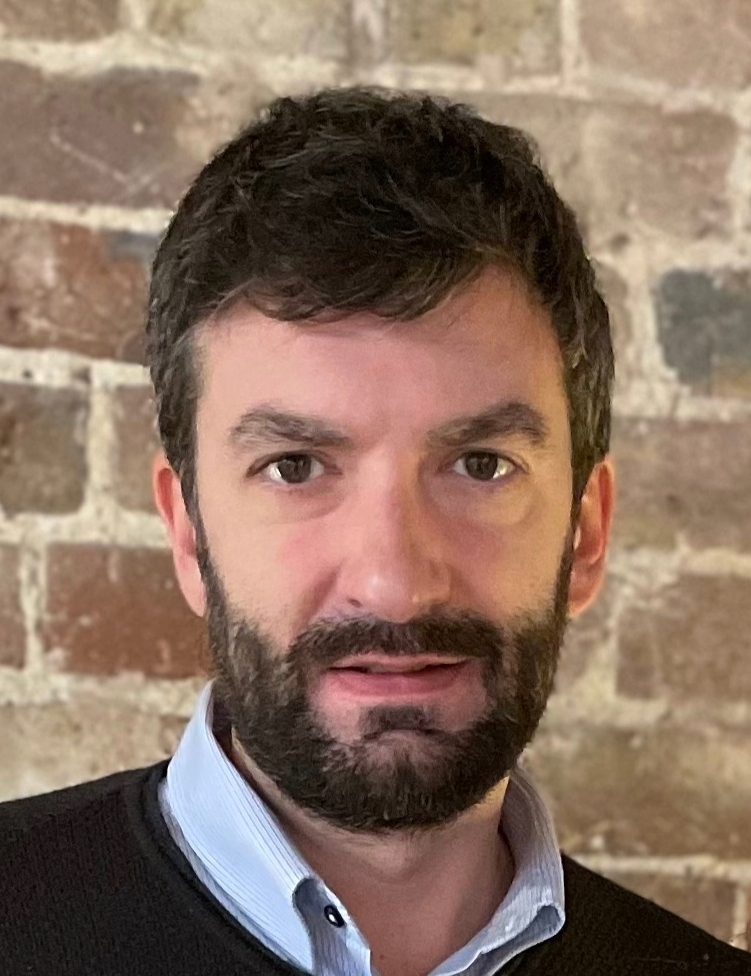
Alice Butler-Warke, University of Reading
Naming, shaming and blaming: the formation and production of place-based stigma
The stigmatisation of place has far‑reaching effects on the lives of residents, shaping how communities are understood, governed, and lived. Over the past decade, growing scholarly attention has been paid to the formation of place‑based stigma. Drawing on my research on place-based stigma and the discursive construction of place, this keynote examines how negative reputations are produced, consolidated, and sustained. I begin by exploring processes of naming, showing how practices of ‘eponymisation’ distil complex communities or neighbourhoods into single, unidimensional attributes that become embedded within place names themselves. I then turn to shaming, revisiting my work on how negative social, moral, and cultural attributes come to be attached to particular places and populations. Finally, focusing on blaming, I consider how stigmatised spatial identities are entangled with wider cultural, social, and political–economic contexts, producing places as scapegoats for broader structural anxieties and inequalities. By illuminating the roles of naming, shaming and blaming in the reproduction of place-based stigma, I argue that understanding the depth and durability of platial stigmatisation requires a shift away from temporally fixed conceptions of place. Instead, I propose a more expansive, relational, and temporal framework that situates stigmatised places within longer histories and wider socio-political processes.

Andrea Ballatore, King’s College London
Where culture takes place – perspectives from cultural geo-analytics
Place and culture participate in a symbiotic exchange. Museums, festivals, libraries, and other cultural venues increasingly frame their work in terms of placemaking, participation, and local engagement. At the same time, places are continuously represented, compared, circulated, and imagined through pervasive digital media platforms, from Netflix series and travel vlogs, to search engines and large language models. Drawing on work carried out at the Cultural Geo-Analytics Lab at King’s College London, I will follow two complementary lines. Firstly, I will discuss how cultural and creative institutions influence place identities, attachments, perceptions, and economies, shaping highly uneven geographies between central hubs and vast peripheries. Then, I will turn to cultural representations of place in media, considering how places are depicted, ranked, and retrieved across platforms. Case studies from place ratings and search technologies illustrate how these dynamic, biased, and emergent media representations are essential in the construction (and contestation) of images of places at all scales, from entire continents to individual streets and cafés we frequent in our daily lives.
Andrea Ballatore (he/him) is Senior Lecturer (Associate Professor) in Cultural Data Science at the Department of Digital Humanities at King’s College London, where he directs the Cultural Geo-Analytics Lab. His research develops and applies data science and GeoAI methods to investigate cultural dynamics in domains such as the creative and cultural industries, GLAM (galleries, libraries, archives, and museums), human geography, and war studies. His work has received funding from UKRI, Ordnance Survey UK, and Facebook Research. He is a strand co-lead on the £10m Leverhulme Centre for Research on Slavery in War.